Gaming
How Blockchain and Web3 Are Transforming the Game Industry
A BANANOW overview of Web3 gaming, digital ownership, play culture, onboarding challenges, and the search for healthier blockchain game design.
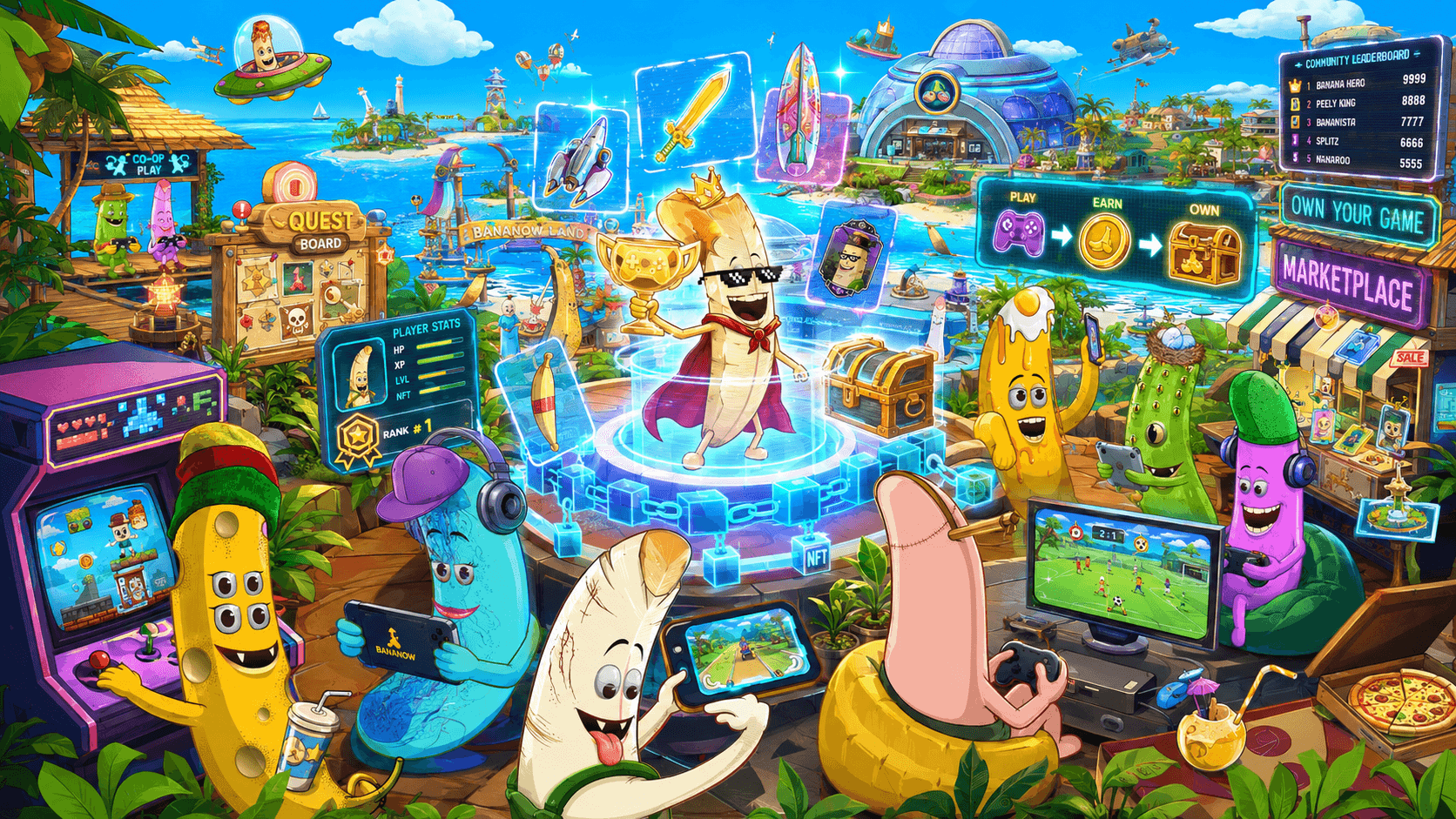
Hi, OiOi Fams!
The game industry keeps evolving, and one of the most interesting experiments of the last few years has been the integration of blockchain and Web3.
At its best, Web3 gaming asks a fresh question: what if players could truly own some of the digital items, identities, or achievements they build inside games?
At its worst, Web3 gaming becomes speculation wearing a game costume.
The difference matters.
From Play-to-Earn to Better Play
Early Web3 gaming was often dominated by Play-to-Earn narratives. The promise was simple: play the game, earn tokens, make money.
That story attracted attention, but it also exposed a problem. When financial extraction becomes the center of a game, the game can stop being fun. Players become workers. Communities become markets. Game design becomes token design. The Land becomes a factory.
Many builders have since moved toward healthier models: play-and-earn, play-to-own, digital collectibles, player identity, and community-driven game economies.
The better direction is clear: gameplay first, ownership second, speculation last.
Digital Ownership
One of the strongest promises of blockchain gaming is digital ownership.
In traditional games, a player may spend years collecting skins, items, characters, achievements, or status. But those assets usually remain locked inside one company’s database. If the company closes the game, changes rules, bans an account, or removes an item, the player has limited control.
Blockchain can create digital assets that are more visible, transferable, and verifiable outside one closed system.
That does not mean every sword, shoe, banana, or spaceship must become an NFT.
It means ownership can become more flexible when used carefully.
The Onboarding Problem
For mainstream players, Web3 can still feel too difficult.
Wallets, seed phrases, gas fees, bridges, chains, marketplaces, scams, and transaction approvals are not natural game experiences. They can interrupt the magic.
If a player needs to understand too much blockchain before enjoying the game, the game may lose them.
That is why the best Web3 games may hide complexity while preserving ownership. The chain should support the experience, not attack the player with confusing steps.
In BANANOW language: the tech should become soil, not thorns.
Mobile and Everyday Play
Gaming is not only about high-end PCs or consoles. Mobile gaming remains one of the largest doors for everyday players.
If Web3 gaming wants wider adoption, it needs to understand daily-life play: short sessions, simple onboarding, familiar interfaces, community sharing, and low-friction identity.
A good Web3 game should not feel like a finance app pretending to be fun.
It should feel like a game that happens to give players stronger digital ownership.
Market Energy and Caution
Web3 gaming has attracted investment, experimentation, and many bold promises. But not every project will survive. Some games will fail because they are not fun. Some will fail because the token model is weak. Some will fail because the community was built on hype instead of play.
This is normal for a new design space.
The important thing is to learn from it.
A game economy must be designed with care. If rewards are too aggressive, the system can become unstable. If ownership is meaningless, players will not care. If speculation dominates, real players leave.
What BANANOW Wants to See
BANANOW Land wants a healthier future for games:
- games that are fun before they are financial;
- ownership that respects players;
- collectibles that carry memory, not only price;
- communities that are not reduced to liquidity;
- onboarding that protects newcomers;
- technology that supports play instead of replacing it.
Web3 gaming still has potential, but only if builders remember the heart of the word: gaming.
People come to play.
Let them play.
Closing
Blockchain and Web3 can change the game industry, but not by turning every game into a marketplace.
The best future may be quieter and stronger: better ownership, better identity, better community coordination, better player memory, and better bridges between the Universe of Reality and the 0101 Universe.
If the game is good, the chain can help.
If the game is bad, the chain cannot save it.